


Voltz Motors
SUMMARY
At Voltz, cancellations weren’t just churn — they eroded trust and revenue. Data from Zendesk and Mixpanel showed the real issue wasn’t dissatisfaction, but uncertainty: customers felt lost after purchase.
Partnering with PMs and engineers, I redesigned the post-purchase flow into a confidence system: real-time tracking, contextual support, and guided alternatives. Careful pilots kept risks low; scaling cut cancellations, sped up support, and gave the company a new playbook for handling high-stakes product changes.
We didn’t approach this as “just a UX improvement.” In a business like Voltz, cancellation touches the core of revenue, cashflow, and customer trust. Any change to this flow had the potential to ripple across sales, logistics, customer support, finance, and even legal compliance. That made it both an opportunity and a high-stakes move.
The trigger
The first signs came from support tickets and Zendesk tags showing a rise in cancellation-related interactions. But deeper analysis with Mixpanel revealed something crucial:
- 62% of cancellations were initiated within 48 hours of a delivery date uncertainty.
- 41% of customers who canceled never interacted with tracking or support before taking that step.
This told us the problem wasn’t always dissatisfaction . It was uncertainty.
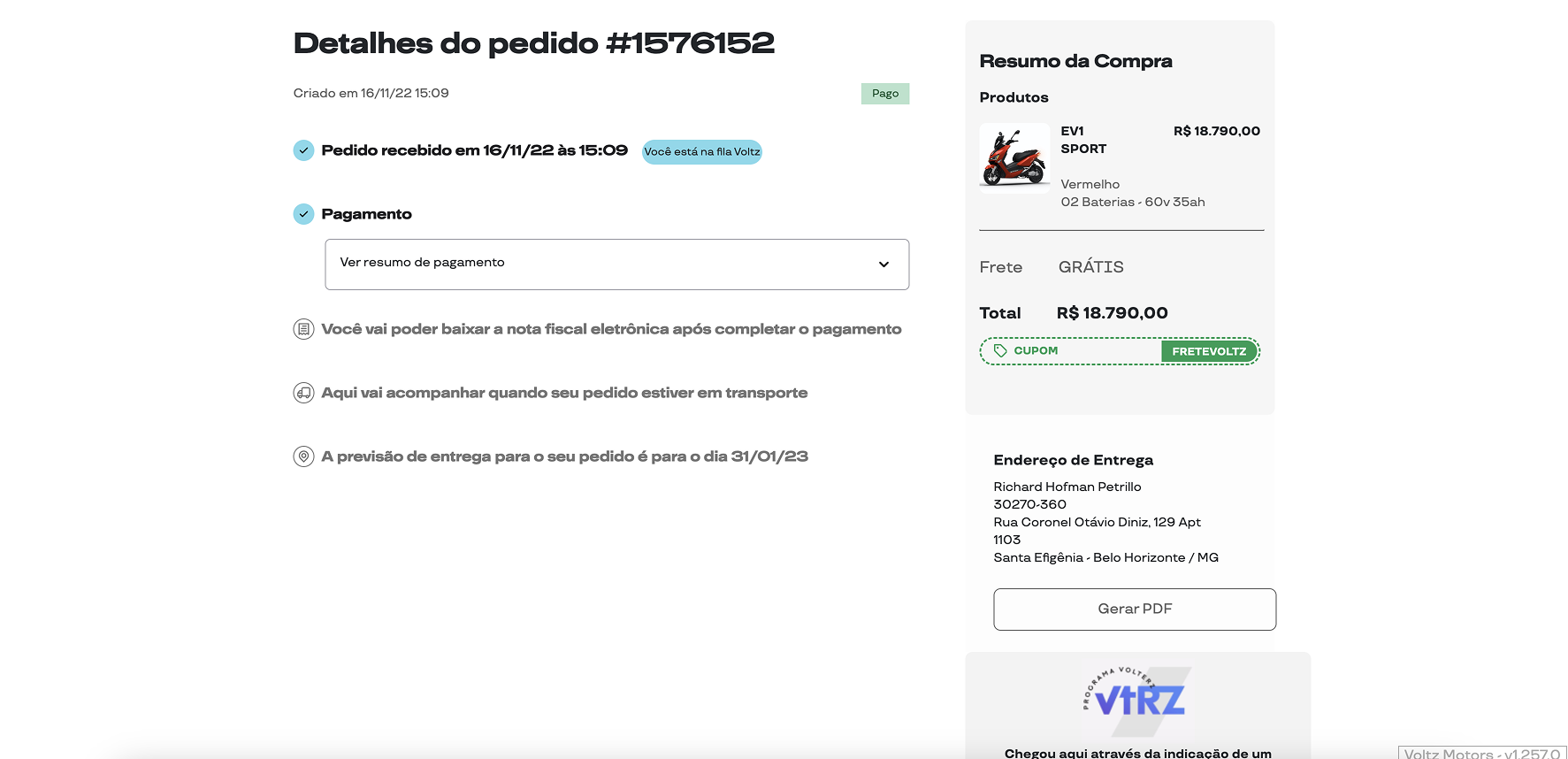
The caution plan
Before making changes, our PM–Design–Dev trio ran a risk alignment workshop with support, sales, operations, and legal. The goal: map all possible business impacts of altering the flow. We identified three key risks:
- Making cancellation too easy, increasing churn.
- Making it too hard, triggering regulatory complaints.
- Overloading operations with requests for delivery rescheduling.
We mapped an opportunity tree and defined guardrails for the redesign:
- Keep the flow inside the authenticated area to reduce duplicates.
- Surface real-time order status before showing cancellation.
- Offer guided alternatives (delay delivery, part replacement) to solve problems before customers cancel.
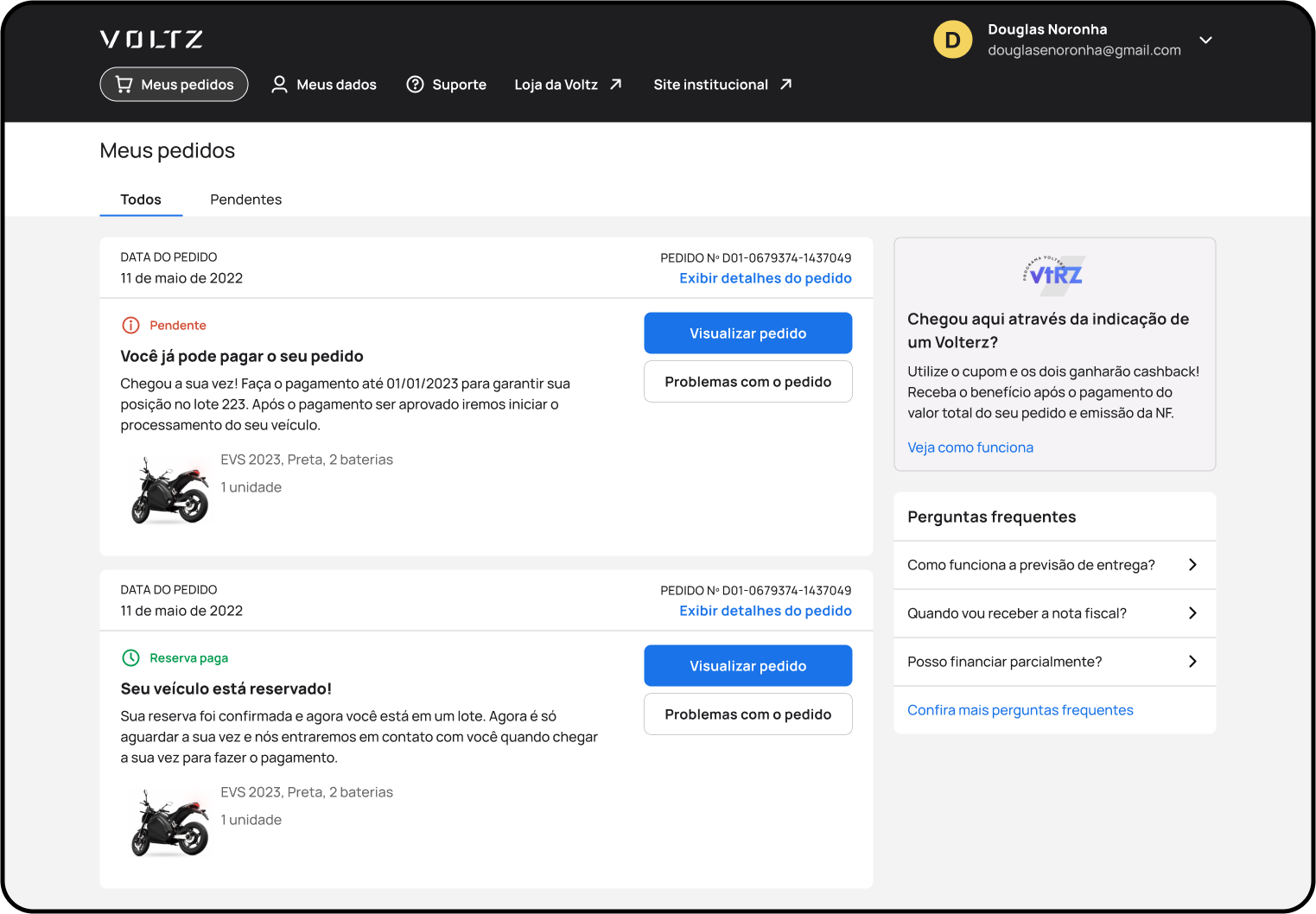
Evolved from a static, unclear list to a status-driven, action-oriented experience. Each order now surfaces clear messages, direct action buttons, and quick access to help — reducing uncertainty and preventing unnecessary support tickets.
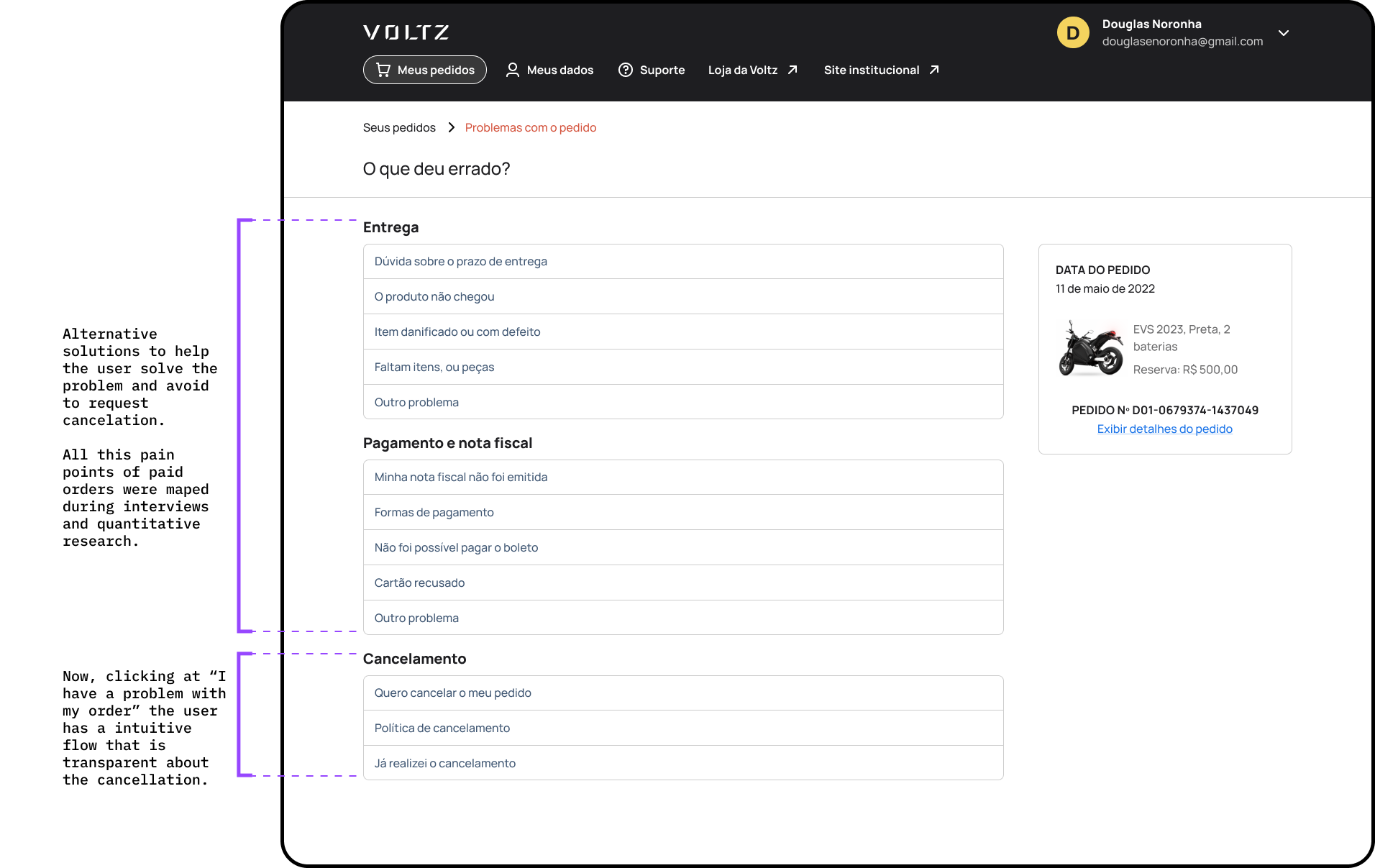
A contextual problem-reporting flow, embedded within the order details, reducing friction and surfacing resolution options before cancellation becomes the only choice.
Controlled validation
We piloted the new flow to 15% of logged-in customers for four weeks, tracking both cancellation rate and alternative adoption rate.
The impact after full rollout
↓ 26% cancellation requests.
- ↑ 21% customers choosing an alternative to cancellation.
- ↓ 18% average handling time for cancellation tickets.
Most importantly, the project became a reference point internally for how to make high-impact changes without risking the business model.
